Social Neuroscience in an Ecological Context
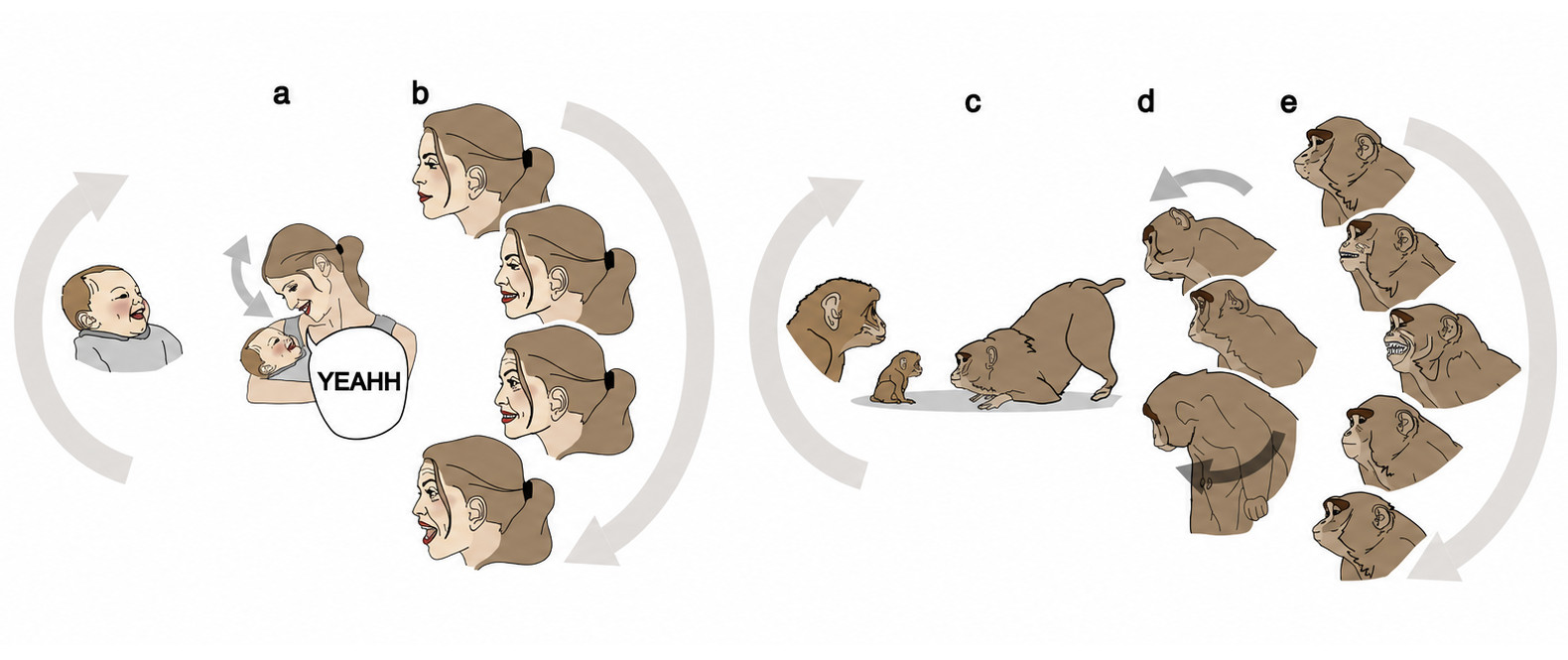
This research area studies how the primate brain represents actions, goals, and social context when behavior unfolds in realistic interactional settings. Rather than treating social cognition as a set of isolated responses to artificial stimuli, the group approach emphasizes social behavior as an embodied, situated, and dynamic process. Actions such as reaching, grasping, grooming, facial communication, and affiliative exchanges acquire their meaning from the social context in which they occur.
A central objective is to understand how frontal, premotor, and parietal circuits encode goal-directed behavior when an animal acts in the presence of others, observes others, or participates in spontaneous social exchanges. This connects classical mirror-neuron and action-observation research with newer neuroethological methods, including wireless neural recordings in freely moving animals. The conceptual shift is important: the same motor act may carry different meanings depending on whether it is self-directed, object-directed, or socially directed.
Methods
- controlled comparative-cognition tasks
- quantity discrimination and numerical-change paradigms
- spontaneous left/right choice tests
- counterbalancing for side bias and stimulus-position effects
- food-reward or object-choice designs
- statistical modelling of choice patterns
- analysis of magnitude, order, reward history, and spatial preference
Papers
| Reference | Topics | URL |
|---|---|---|
| Baldi et al. (2025). Frontal cortex encodes action goals and social context in freely moving and socially interacting macaques. bioRxiv. | Core current output for wireless/free-moving macaque social neurophysiology. | DOI: 10.1101/2025.10.21.683128 |
| Ferrari, P. F., & Baldi, J. (2024). Social neuroscience: Primate research goes wireless. Current Biology, 34(11), R536-R539. | Conceptual framing for ecological, wireless social neuroscience. | DOI: 10.1016/j.cub.2024.04.046 |
| Coudé et al. (2019). Grasping neurons in the ventral premotor cortex of macaques are modulated by social goals. Journal of Cognitive Neuroscience, 31(2), 299-313. | Mechanistic bridge between motor coding and social context. | DOI: 10.1162/jocn_a_01353 |
| Sclafani et al. (2023). Similarities and differences in the functional architecture of mother-infant communication in rhesus macaque and British mother-infant dyads. Scientific Reports. | Comparative-developmental evidence on naturalistic mother-infant communication. | DOI: 10.1038/s41598-023-39623-3 |
| Mancini, Ferrari, & Palagi (2013). Rapid facial mimicry in geladas. Scientific Reports, 3, 1527. | Foundational comparative work on fast social sensorimotor coupling. | DOI: 10.1038/srep01527 |
| Mancini, Ferrari, & Palagi (2013). In play we trust: Rapid facial mimicry predicts the duration of playful interactions in geladas. PLoS ONE, 8(6), e66481. | Links mimicry timing to quality and duration of playful interaction. | DOI: 10.1371/journal.pone.0066481 |